Narrative ambiguity
The Turn of the ScrewNarrative ambiguity is the defining uncertainty through which The Turn of the Screw presents its final confrontation: the governess experiences Peter Quint at the window as an immediate supernatural presence, while Miles cannot see what she sees, and the boy’s death follows the moment she believes she has freed him. The scene gives forceful access to her fear and conviction but no independent confirmation of the apparition or of its causal power. Its ending therefore makes her apparent victory inseparable from a devastating loss, leaving the supernatural explanation and the governess’s interpretation in tension.
Perception and the Apparition
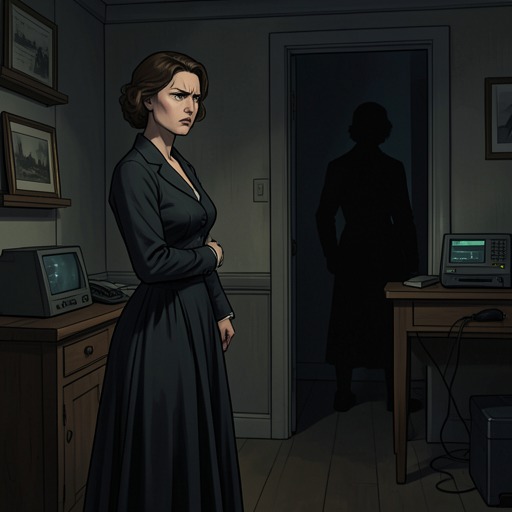
The final scene is filtered through the governess’s first-person account, which describes perception under intense pressure rather than offering an external view. As she begins to ask Miles about a letter taken from the hall table, her attention splits. She springs up, draws him close, and turns his back toward the window. Only then does she report that Quint has come into view, first as a figure outside and then, close to the glass, as a white face glaring into the room. She understands the apparition as the return of a presence she has faced before, but the account supplies no perspective beyond hers to confirm what is at the window.
The governess’s response makes her simultaneously a witness and an actor in the scene. She describes an inspiration to keep Miles unaware of what she sees, even while holding him at arm’s length and observing sweat on his forehead. Her language casts the encounter as a struggle for a human soul, but that interpretation belongs to her narration: the text establishes the intensity of her conviction, not an independent account of a demon or of supernatural possession. Her protective action may look like an effort to shield the boy; at the same time, it prevents him from seeing the window clearly.
Miles’s Confession and Its Limits
The exchange about the letter briefly appears to bring the governess and Miles into shared knowledge. He admits that he opened it, and she watches the mockery fall from his face as uneasiness comes into view. Yet she believes her success has sealed his understanding and stopped his communication: Miles knows that someone is present, she thinks, but does not know who or what, and does not know that she recognizes it. When she looks back at the window, she sees clear air and takes the absence of the apparition as proof that her intervention has quenched its influence. The observable clearing and her explanation for it remain distinct claims.
Miles’s account of his expulsion is equally incomplete. He says that he did not steal, then struggles to explain what brought his schoolmates to reject him: he said things, he says, and they thought that enough. He cannot remember whom he spoke to or the names of the people involved. Asked what he had said, he turns away, and the governess’s attention shifts back to the window. The scene thus places a faltering confession beside an apparition available only to her sight; it never supplies the missing details of Miles’s school scandal or establishes that the haunting caused it.
Competing Interpretations at the Window
When the governess sees the white face again, she treats its appearance as an attempt to blight Miles’s confession and stop his answer. She leaps toward him, cries out that the encounter must end, and interprets his attention to her words as the beginning of his liberation. Miles, however, asks whether Miss Jessel is there. The governess rejects his guess and insists that the figure is at the window, identifying it as Quint. His mistake could suggest that he senses a presence without correctly identifying it; it could also expose how little his experience corresponds to the governess’s confident account. The narration does not settle between these readings.
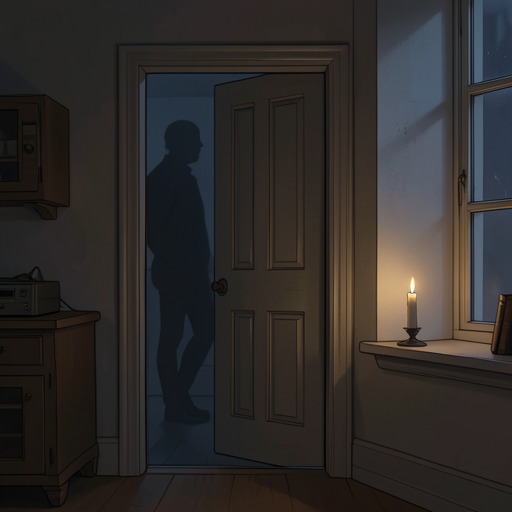
Miles then asks where Quint is, and the governess takes his response as a surrender of the name and a tribute to her devotion. She tells him that Quint no longer matters and urges him to look. But Miles turns and stares at the quiet day, seeing nothing. For the governess, this is the decisive sign that Quint has lost him forever; for Miles, the absence is not described as a victory. The same clear window that confirms the governess’s triumph in her own interpretation registers, in the action she narrates, as an empty view.
The Ending and the Limits of Certainty
The ending makes the cost of that divergence unavoidable. After Miles sees only the quiet day, he cries out as if hurled over an abyss. The governess catches him and holds him, initially understanding the gesture as rescuing him from a fall. A minute later, she realizes that his heart has stopped. The death is certain within her account; its relation to the apparent disappearance of Quint is not explained by any evidence outside her interpretation. Her conviction that she has won is overtaken by the fact that Miles is dead in her arms.
The final image cannot be reduced to either a confirmed supernatural rescue gone wrong or a definitive exposure of the governess’s delusion. Quint’s repeated appearance, the governess’s bodily terror, Miles’s limited and uncertain responses, and the clear window converge without producing a shared account of events. Her narration offers a strong claim of agency—she says the influence is quenched by her triumph—beside an outcome that makes that claim painfully unstable. The unresolved distance between witness, interpretation, and consequence is the story’s final turn: the reader receives the governess’s certainty, but not the independent evidence needed to make it conclusive.